

Don’t Be Afraid of the Miami Service Charge
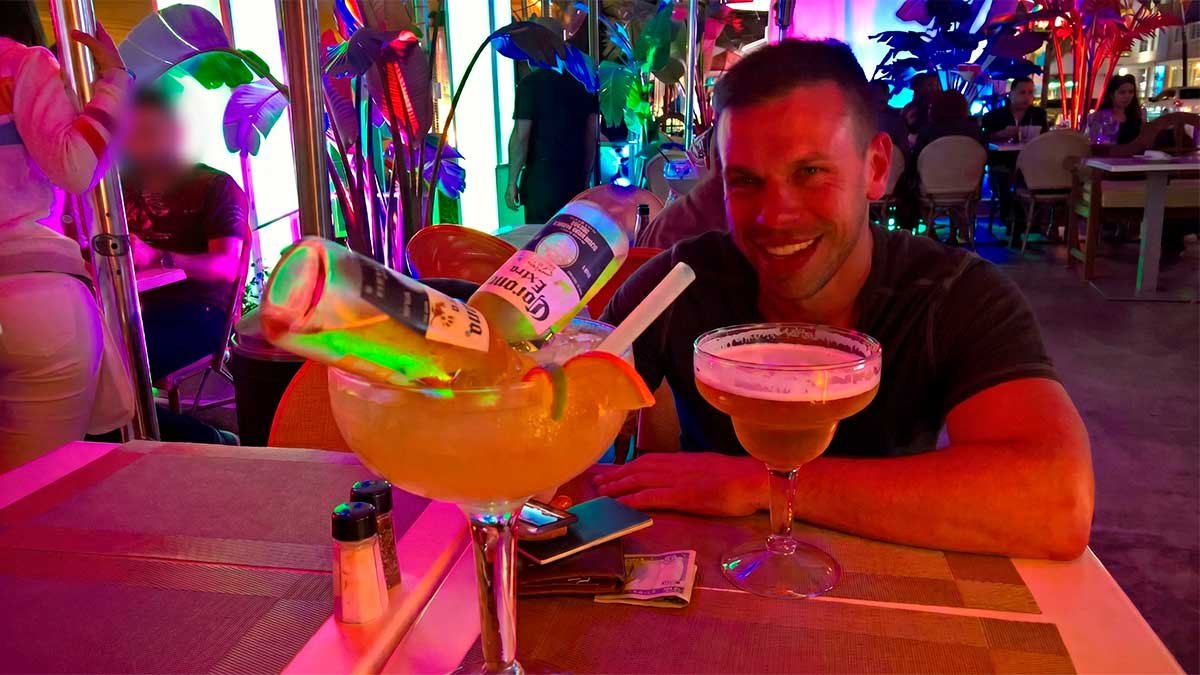
I’ve lived here long enough to know better, yet there I was: standing on a sidewalk in SoBe, feeling like a total amateur. It wasn’t the “Giant Margarita” that got me—it was the math I didn’t do.
It happened on Ocean Drive—that iconic, neon-lit strip in SoBe (South Beach, for those who haven’t spent enough time between 1st and 23rd Street). I was walking past the Art Deco hotels, the breeze was hitting just right, and a host at one of those sidewalk cafes promised me a “Giant Margarita” that looked more like an aquarium than a drink.
I sat down. I drank. I paid.
But when the bill came, I did what every polite person does: I saw a line for “Tip,” I did the math for 20% in my head, and I signed it. It wasn’t until I was walking back to my car—avoiding the $40 valet traps—that I looked at the crumpled receipt. There it was, tucked between the Sales Tax and the total: Miami Service Charge 20%.
I had tipped 40% on a $50 margarita. I had just paid nearly $100 for fermented lime juice and cheap tequila. I felt like a mark. A tourist. A sucker.
Miami Worth It Tip: Don’t be afraid of Miami. But for the love of everything holy, be afraid of its receipts. If you want to survive The 305, you need to drop the polite “I’ll just pay whatever” attitude and start acting like you live here.
The Truth About the Miami Service Charge
The biggest pain point for anyone landing at MIA and heading straight to a table is the confusion over the Miami service charge. In most of the U.S., a tip is a voluntary gift for good service. In Miami, especially in Sobe and Wynwood (the graffiti-filled arts district north of Downtown), the service charge is a pre-calculated line item that is often mandatory.
The “Double Tip” Trap
Most restaurants in high-traffic areas automatically add an 18% to 20% service charge. Here is the dirty secret: they hope you’re too distracted by the music, the people-watching, or the third Mojito to notice. They leave an “Additional Tip” line wide open, staring at you, making you feel guilty.
I’ve seen servers—fast-talking, “best friend” types—point to that empty line while conveniently covering the “Service Charge” line with their thumb. It’s an art form. It’s a hustle. And it’s why people leave Miami thinking the city is nothing but a playground for scammers.
Scenario A: The Misinformed Tourist (My Past Self)
- The Plan: They drive a rental car to South Beach at 8:00 PM on a Saturday.
- The Logistics: They get stuck on The Palmetto (826 Highway) for an hour, then crawl across the MacArthur Causeway. They panic and pull into a private valet lot that charges $40.
- The Meal: They eat at a place with neon lights on Collins Ave. They don’t look at the menu carefully.
- The Bill: * Dinner: $100
- Miami Service Charge (20%): $20
- Additional Tip (The tourist didn’t notice the first one): $20
- Sales Tax: $7
- Total: $147 for a $100 meal, plus $40 parking. They leave Miami feeling bitter and broke.
Scenario B: The MWI Reader (The Sophisticated Insider)
- The Plan: They head to Sobe at 6:00 PM or take an Uber to avoid the valet mafia.
- The Logistics: They look for the “Green Circles”—the municipal parking garages (like the one on 7th and Collins) where you pay $2/hour instead of $40 flat.
- The Meal: They choose a spot in The Gables (Coral Gables, the leafy city south of Miami) or a local favorite on Calle Ocho (8th Street, the heart of Little Havana).
- The Bill: They see the Miami service charge. They check the math. They see the server was “just okay” and they leave the “Additional Tip” line blank.
- The Move: They take the $40 they saved and spend it on a late-night Ventanita run (the walk-up windows where you get a Colada and a croqueta).
- Total: $125. They feel like they conquered the city.
The Logistics of Reality: Parking and Movement
If you are going to dine in Miami in 2026, you have to account for the “Logistics Tax”—the time and money it takes just to get to the table.
- The Valet Scam: Never, ever use a valet unless you are at a high-end hotel and they are paying for it. In places like Brickell (the financial district), a valet will take your car 5 miles (8 km) away to a secret lot, and you’ll wait 30 minutes to get it back. Use the “ParkMobile” or “Miami Beach Parking” apps.
- The Causeway Factor: On Friday nights, the bridges connecting the mainland to the beach (Julia Tuttle, MacArthur) are parking lots. If your reservation is at 8:00 PM and you are 10 miles (16 km) away, leave at 6:45 PM. I am not joking.
Public Parking Secret
In South Beach, look for the “P” signs with a green circle. These are city-owned. The private lots have “P” signs with a red circle or no circle. The price difference is usually 400%.
The Money Talk: The Receipt Breakdown
| Item | Average Cost | My Verdict |
| Cocktail (Sobe) | $22 – $35 | Not Worth It. Drink at a local dive bar or a Ventanita first. |
| Valet Parking | $30 – $50 | Scam. Use municipal garages for $2/hour. |
| Miami Service Charge | 18% – 20% | Mandatory. It’s already on the bill. Don’t add more. |
| Additional Tip | You decide | Rarely Worth It. Only if the server was “legendary.” |
| Sales Tax | 7% | Inevitable. Government’s cut. |
Is the Service Charge Actually “Fair”?
Look, I get it. I feel the guilt too. I know that the person serving my Vaca Frita on Calle Ocho probably lives 20 miles (32 km) away in Hialeah and spends two hours a day in traffic. Their base salary is tiny.
But the Miami service charge system is actually hurting them. Why? Because when a restaurant adds 20% automatically, the server often stops trying.
The best way to be a “Good Human” in Miami isn’t to pay the double tip. It’s to:
- Read the bill.
- Verify the service charge.
- Carry cash.
If you give a server $10 in cash, that goes into their pocket today. It doesn’t get processed through the restaurant’s payroll where the owner might take a cut for “administrative fees.” Cash is king in the 305.
Insider Secret: Look at the bottom of the receipt. If you see a “Wellness Fee” or “Kitchen Appreciation Fee” (usually 3%), ask them to remove it. It is legally optional in most cases, and it’s just a way for owners to avoid raising menu prices.
FAQ
Can I ask to remove a Miami service charge?
Technically, if it is clearly stated on the menu or a sign at the entrance, it’s a contractual part of the meal. If it wasn’t disclosed anywhere, you can fight it. But honestly? It’s not worth the shouting match. Just don’t add an extra tip.
What if the service was terrible?
If the service was “trash-tier,” ask for the manager. Explain that you are paying the 18% because it’s automatic, but you want them to know why you aren’t leaving a cent more and why you won’t be back.
Is tipping expected at a Ventanita?
If you’re standing at a window on Calle Ocho getting a $2 cafecito, toss the change or a dollar into the jar. These folks are the backbone of the city and they aren’t hitting you with 20% auto-charges.
The Worth It Verdict: The 305 Dining Rule
If you are eating at a place that adds a 20% Miami service charge and then leaves the “Tip” line blank to trick you: It is NOT Worth It. You are paying a premium for a place that views you as a “one-time” tourist wallet rather than a guest.
However, if you find a spot in The Gables or Coconut Grove that is transparent about their fees and provides service that matches the price? That is Worth It. Don’t be afraid of the bill. Just read it from the bottom up. In Miami, the truth isn’t in the menu—it’s in the fine print.