

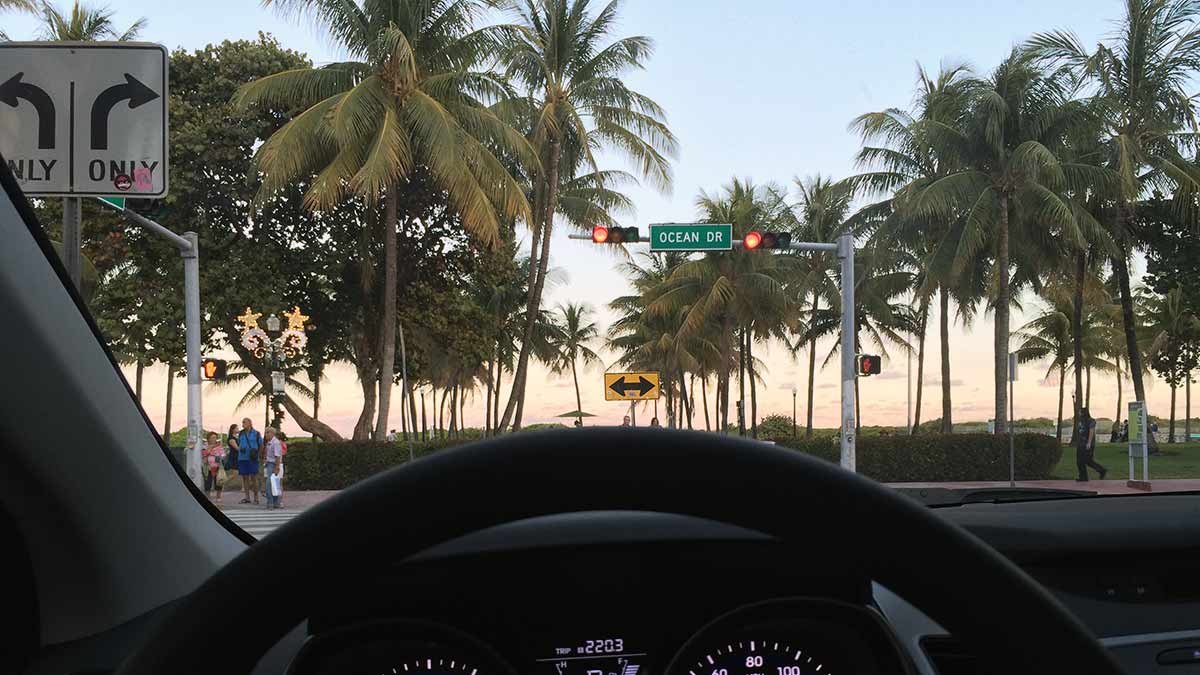
Paradise to Panic: Now What?
If you are standing on the shoulder of the Palmetto Expressway right now, staring at a crumpled fender and wondering if your vacation is over: Take a deep breath. It’s not over. But you need to act fast, and you need to act smart. Driving in Miami is absolutely worth it—you can’t see the real “305” from the back of an Uber—but the “Sunshine State” has a dark side when it comes to traffic law.
The short answer? Move the car, call the cops, and never say “I’m sorry.” If you didn’t buy the extra insurance at the counter, you’re in for a fight, but this guide will show you how to win it.
Miami traffic is a wild, beautiful, and terrifying beast. It’s a mix of tourists who don’t know where they’re going, locals who drive like they’re in a video game, and the constant heat that makes everyone a little more aggressive. Don’t be afraid of it. Use this city. Explore The Gables (Coral Gables), find the best frita in Calle Ocho (8th Street), and cross the bridges. Just do it with your eyes open and your legal shield up.
The “Tourist Trap” vs. The “Worth It” Scenario
Most people arrive at MIA (Miami International Airport), walk to the car rental center, and treat the contract like a terms-of-service agreement they never read. That is the first mistake.
Scenario A: The Hype-Chaser’s Nightmare
Meet “Dave.” Dave wanted the cheapest rate possible to save money for bottle service at a club in Brickell. He declined every insurance option because his credit card company told him he was “fully covered.” While trying to find a parking spot near Lincoln Road, Dave swiped a parked Mercedes.
Thinking he was being a “good guy,” Dave left a note with his number and said, “So sorry, my fault!” He didn’t call the police because it was a “small scratch.”
The Fallout: A week later, Dave gets a letter. The Mercedes owner has hired an “injury lawyer.” They are claiming $40,000 in damages and “diminished value.” Dave’s credit card company refuses to pay because there is no official police report. Dave is now personally liable for a bill that costs more than his entire trip.
Scenario B: The Smart Insider
Meet “Alex.” Alex read this post. He spent the extra $25 a day for the LIS (Liability Insurance Supplement). When a truck clipped his mirror on the Dolphin Expressway (SR-836), Alex didn’t argue. He moved to the shoulder, called 911, and got a Case Number. He stayed polite but silent about who was at fault.
The Fallout: Alex returned the car, filled out a one-page form at the rental desk, and went to dinner. The insurance company handled the rest. Alex’s total loss? The cost of a few cocktails.
The Logistics of Chaos
When the metal crunches, your brain goes into “flight or fight” mode. You need a checklist that works when you’re shaking.
The “Move It” Rule is Law
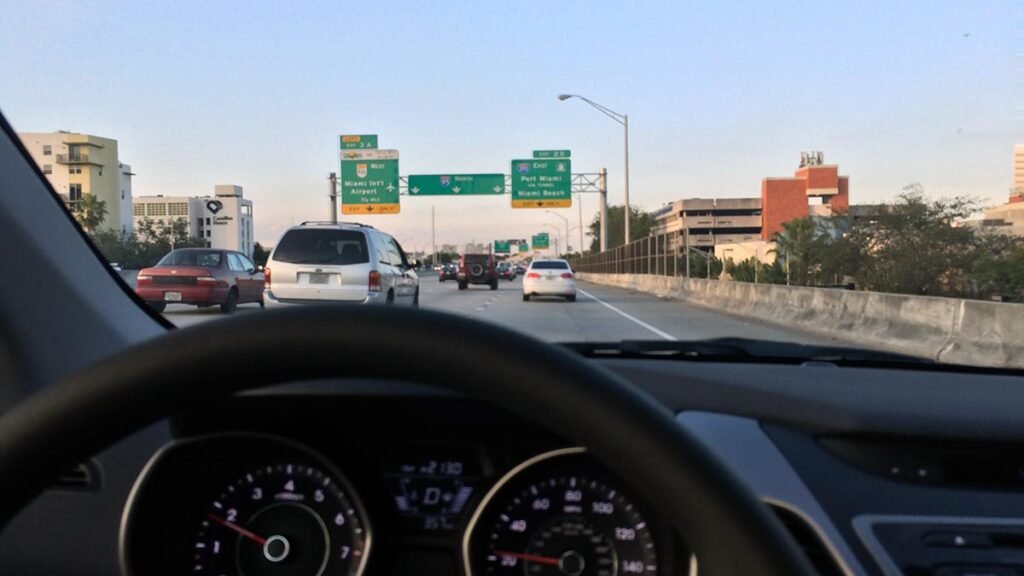
In many parts of the world, you leave the cars exactly where they are until the police arrive. In Florida, that will get you a ticket. If there are no serious injuries and the cars can move, the law requires you to move them to the shoulder.
- Why? The I-95 and the Palmetto (SR-826) are some of the busiest roads in the country. Blocking a lane for a fender bender creates a 5-mile (8 km) backup in minutes. Move to the nearest safe spot—a gas station or a “green circle” (public parking) is even better.
The Police Report: Your Only Shield
You will hear people say, “Don’t bother the cops for a scratch.” Ignore them. In Miami, the car rental companies are like hawks. They want to charge you for every dent, even ones that were there before you got the keys.
- The Case Number: Sometimes the police are too busy to write a 10-page report for a minor bump. If that happens, ask for the Case Number. This is the official record that you did your part. Without this, your insurance (and your credit card) has a “get out of jail free” card to deny your claim.
Understanding the “Patchwork” of Police
Miami isn’t just one city. Depending on where you are, a different department will show up:
- Miami-Dade Police: Tan cars. They cover the big areas like Kendall and Doral.
- City of Miami: Blue and white. They own the downtown core and Wynwood.
- Florida Highway Patrol (FHP): Black and tan. If you’re on a road with a number (like the 836 or I-95), these are the guys you’ll see.Tip: Take a photo of the officer’s business card or write down their badge number. You’ll need it to find the report 10 days later.
The “I’m Sorry” Trap: A Cultural Minefield
I cannot stress this enough: Never apologize at the scene of an accident. In the U.S. legal system, an apology is often interpreted as an Admission of Guilt. Miami is the world capital of “Personal Injury Lawyers.” You see their faces on every billboard from Hialeah to Pinecrest. They are waiting for you to say something stupid so they can sue you for everything you’re worth.
- What to say: “Is everyone okay?”
- What to do: Exchange insurance info. Take a photo of their Driver’s License and their Insurance Card.
- What to avoid: “I didn’t see you,” “I was looking at my GPS,” or “I’m so sorry.”
The “Wrecker Chasers”: Miami’s Prowling Vultures
This is something the travel guides never tell you. Miami has “Wrecker Chasers”—private tow truck drivers who listen to police scanners. They will often arrive at your accident site before the police. They will act like they are there to help. They might even say the police sent them. It is a lie. If you let a “pirate” tow truck take your car, they will tow it to a private lot in a sketchy part of town and charge you $500 to $1,000 per day in “storage fees.” They will hold your car hostage until you (or the rental company) pay in cash.
- The Rule: Only let a tow truck touch your car if you called them through your rental company’s emergency line or if the police officer on the scene explicitly orders that specific truck to move you.
The Receipts: The Real Cost of a Crash
Let’s be real about the costs. Miami is expensive, and it’s tempting to cut corners.
| Item | Average Cost | My Verdict |
| CDW (Collision) | $20 – $30 / day | Optional (if your card covers it). This covers the car. |
| LIS (Liability) | $15 – $25 / day | NON-NEGOTIABLE. This covers the $1M lawsuit. |
| DUI Legal Fees | $15,000+ | Life-Ruining. Don’t drink and drive. |
| Public Parking | $2 – $4 / hour | Worth It. Avoid the $60 valets. |
| The “Credit Card” Gap | $0 | A Trap. They don’t provide lawyers; they just reimburse. |
Note: All prices are in USD. Florida Sales Tax is 7%.
Why your Credit Card isn’t enough: Most “Gold” or “Platinum” cards provide Secondary Coverage. This means they only pay after your own insurance pays, and they only cover the car itself. They do not provide Liability. If you hit a luxury SUV in Aventura and the passengers claim they have “whiplash,” your credit card will not give you a lawyer. You will be on your own against a professional litigator.
DUI: The “One Mojito” Danger
Miami is a city of celebration. Between the pool parties in SoBe and the nightlife in Brickell, there is alcohol everywhere. But Florida law is brutal.
- The Limit: 0.08% BAC. In the Florida heat, after a day at the beach, one or two strong drinks can put you over the limit.
- The Arrest: If you crash and have alcohol in your system, you are going to jail. Period. You will be processed at the TGK (Turner Guilford Knight Correctional Center), and it is not a “vibrant” experience.
- The Future: For international visitors, a DUI means your ESTA or Visa is likely gone forever. You won’t be coming back to the U.S. for a very long time.The Insider Way: Take a Lyft. The $25 fare is a lot cheaper than a $15,000 defense attorney.
The “Invisible” Consequences: Passports and Lawsuits
If you are a U.S. resident, an accident without enough insurance can result in a “Judgment.” This means a court gives the other person the right to take your house, your car, or your future wages.
If you are a tourist, you might think you can just fly home and forget about it. You can’t.
- International Debt Collection: These insurance companies are global. They will find you in your home country.
- Immigration Flags: If you leave the U.S. with an outstanding legal judgment or a pending criminal charge (like a DUI), your name will be flagged. The next time you try to clear customs at MIA or JFK, you will be pulled into a side room, and your entry will likely be denied.
Frequently Asked Questions
What if the other driver has no insurance?
Nearly 20% of drivers in Florida are uninsured. If you bought the LIS or UM (Uninsured Motorist) coverage from the rental agency, you are protected. If not, you’re paying for the repairs yourself and hoping you can sue a person who likely has no money.
The rental car agent was very aggressive about the insurance. Was I scammed?
They are aggressive because they want the commission, but in Miami, they are also right. The Liability (LIS) is the only thing standing between you and a massive lawsuit.
Can I get a police report online?
Yes, but not immediately. It usually takes about 10 days. You’ll go to the website of the department that responded (Miami-Dade or FHP), enter your Case Number, and pay a small fee.
Don’t Gamble with Miami
Don’t let this guide make you stay in your hotel. Miami is meant to be driven. You want to feel the wind as you cross the MacArthur Causeway with the cruise ships on your left and the skyline on your right. You want to drive through the banyan trees in Coconut Grove.
Is it worth it? Yes. But only if you are protected.
The $150 you spend on extra insurance for a week is the best “souvenir” you can buy. It buys you the right to make a mistake without losing your house. It buys you the right to enjoy your vacation without staring at the rearview mirror in fear.
Drive like a local: be aggressive, be alert, but most importantly, be insured.