

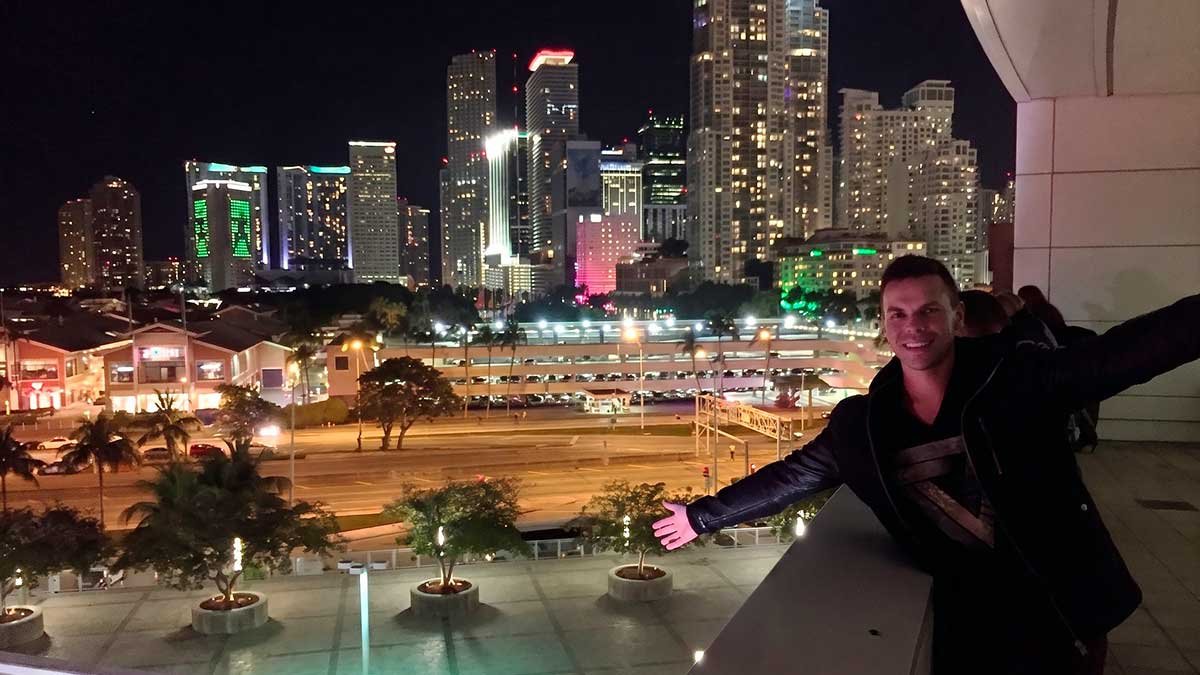
I have spent exactly 23 years watching Miami grow from a flashy beach town into a complicated, high-speed global metropolis. I didn’t learn how to navigate this city from a brochure. I learned it by living it. I’ve had an iPhone snatched in a split second, I’ve been “fast-talked” in parking lots, and I’ve spent literal weeks of my life stuck on the Palmetto Expressway.
How to Master the City Like a Battle-Hardened Local
If you are looking for a “everything is beautiful” travel blog, you are in the wrong place. Miami is intense. It is diverse. It is a mix of extreme wealth and people just trying to survive. But here is the thing: Don’t be afraid of Miami. Is it worth it? Yes. But only if you stop acting like a vulnerable tourist and start moving with the confidence of someone who knows the rules of the game. I’m going to give you the “armor” of data you need to stop worrying and start exploring.
The Infamous “Back Room”: Why Secondary Inspection is Not Your Enemy
The first fear usually hits before you even exit Miami International Airport (MIA). You see the long lines at Customs and Border Protection (CBP) and hear horror stories about the “back room”—the secondary inspection room.
People think getting pulled aside means they are being deported. It’s usually just a data check. Maybe your name is common, maybe a document didn’t scan right. It’s a procedure, not a crime scene.
How to Handle the CBP and the “Secondary Inspection”
The agents are professionals protecting a high-stakes border. If you are acting correctly, they are actually your friends. Here is how you handle it:
- Be direct and calm: Answer exactly what is asked. “How long are you staying?” “Ten days.” Period. Don’t over-explain.
- Don’t get nervous about the room: If you are sent to secondary, sit down, wait your turn, and answer truthfully. It’s just a routine sampling check.
- Respect the shield: Many officers are bilingual and highly trained. Treat them with respect, and they will do the same. They aren’t there to ruin your trip; they are there to make sure the city stays safe for everyone.
Safety and the “Transition Zone” Trap
Miami isn’t a city you can just label with a single word. It has a personality that shifts block by block, and honestly, that’s part of what makes it so interesting. You can be standing next to a row of million-dollar Ferraris one minute, and after a short, five-minute stroll, find yourself on a quiet, leafy street where the high-energy buzz of the city just… softens. It’s not about “danger”; it’s about the vibe changing from a public stage to a private neighborhood.
When my iPhone was snatched in Little Havana, it wasn’t a “scary movie” moment—it was a classic lesson in being present. I was so caught up in the rhythm of the music and the smell of the coffee that I wandered away from the lively main stretch of Calle Ocho and into a quiet residential area where the day was winding down. I got a little too comfortable and stopped paying attention to my surroundings.
Think of it like being a guest in someone’s living room versus being at a block party. Both are great, but you carry yourself a little differently in each. Once you learn to “read the street” and stay aware of that transition from the tourist spotlight to the local residential rhythm, the city stops feeling unpredictable and starts feeling like home. It’s all about moving with the flow, not against it.
My Tactics for Transition Zones and Personal Safety
- The 10 PM Rule: In areas like Little Havana (Calle Ocho), Wynwood, or Downtown, stay where the lights and people are. If the street gets dark and the foot traffic stops, you’ve gone too far.
- The “Ear Scam” Defense: If a stranger approaches you in a parking lot or a crowded sidewalk with a frantic story (“My car broke down,” “I have a medical emergency”), do not stop. This is a distraction scam. While they “grab your ear” with a story, someone else is checking your pockets or your car. A firm “No” while moving is your best defense.
- Know the No-Go Map: Avoid wandering into Overtown or Liberty City unless you have a specific, daytime reason to be there. Areas near the US1 (South Dixie Highway) can also be tricky; under the Metrorail tracks, things get desolate fast. Keep your doors locked and your phone off the dashboard at stoplights in these spots.
The Driving Dilemma: Is it Worth the Chaos?
One of the biggest questions I get is: “Can I visit Miami without a car?“
My answer: You can, but you’ll be miserable. If you stay in a South Beach bubble and take Ubers everywhere, you’ll spend a fortune and miss 70% of what makes Miami ‘Worth It.’ But I get the fear. The I-95 is aggressive. The Palmetto is a mess. The drivers treat turn signals like a sign of weakness.
Still, you aren’t going to find the pulse of the 305 from the backseat of a stranger’s Uber, and that is precisely why you need a car to truly see the real Miami if you want the trip to be more than just a hotel stay.
Dominating the I-95 and Navigating Miami Without Stress
- The I-95/Express Lane Strategy: Miami highways have “Express Lanes” separated by plastic poles. They use dynamic pricing (it can jump from $1 to $15 in minutes). Do not “lane dive” (crossing the poles). You will get a massive fine or cause an accident. Get a SunPass portable transponder at a pharmacy (CVS/Walgreens) as soon as you arrive to handle tolls automatically.
- Be Predictably Aggressive: Don’t hesitate. If you need to merge, find your gap and take it. Miami drivers are fast, but they are predictable once you get the rhythm.
- The “Green Circle” Parking Rule: Never, ever park in a private lot that says “Residents Only” or “Towing Enforced.” The towing companies here are faster than Formula 1 pit crews. Look for the PayByPhone green signs. If you see that green circle and a zone number, you are safe. Use the app. It’s the only way to park like a local.
Where to Sleep: Avoiding the Hidden Traps
The anxiety about picking a place to stay in Miami usually boils down to two things: getting blindsided by hidden fees at a hotel or ending up in an Airbnb that looks “charming” in photos but feels isolated and sketchy at 2 AM.
The Hotel Game: Watch the Fine Print
Miami is the world capital of “papercut pricing.” I’ve seen people lose it at the front desk when a $150 room suddenly jumps to $280 because of mandatory resort fees and $50-a-night valet parking. It’s a city that loves its fine print. If you don’t want to start your trip with a financial hangover, check out this tactical playbook for smart travelers looking for the right hotels without the nasty surprises.
Airbnbs and Rentals: Don’t Get “Ghosted”
The Airbnb game here is a coin toss. You might find a hidden gem, or you might find yourself in an illegal rental that gets shut down mid-trip. The real fear isn’t just a “ghost host”—it’s the geography. You don’t want to book a spot in a “dead zone” where the street vibe shifts the moment the sun drops. Before you hit “book,” make sure you’re following an honest guide to Miami airbnb and vacation rentals that tells you the truth about the neighborhoods.
The “Máfia” of Money: Tips, Taxes, and Hidden Fees
Let’s be real: Miami operates on a predatory level when it comes to tourist pricing. It is a city designed to separate the uninformed from their cash through a thousand tiny papercuts. If you aren’t paying attention, you’ll be blindsided by a barrage of “destination fees,” inflated valet rates, and service charges that materialize out of thin air just as the check arrives.
In this town, the price you see on the sign is rarely the price you pay at the register. If you walk in without your guard up and your eyes on the fine print, your bank account will pay a heavy price for your lack of local intel.
Cracking the Code of the Miami Receipt
- The Service Charge Trap: Look at your bill before you reach for your wallet. Almost every restaurant in tourist zones (South Beach, Brickell, Wynwood) adds an automatic 18% or 20% Service Charge. If it’s there, you are done. Do not tip on top of it unless the server was spectacular.
- The Itemized Bill: Always ask for the “itemized bill,” not just the credit card slip. Check for “Resort Fees” at your hotel. In 2026, these can be as high as $55 a night. They are non-negotiable usually, but you should know they are coming so you don’t ruin your mood at checkout.
- The Grocery Reality: If you want to save, avoid the small convenience stores on Washington Ave. Go to a Publix or a Milam’s. You’ll pay “real” prices instead of “tourist tax” prices.
| Expense | Real Cost (2026) | The Local Verdict |
| Valet Parking | $35 – $65 | Avoid it. Use municipal garages (the “P” signs) for $2/hr. |
| Cocktail in Brickell | $22 | You are paying for the view and the air conditioning. |
| Uber (MIA to Beach) | $35 – $55 | Use Uber during off-peak. During rush hour, take the airport shuttle. |
| 10 Miles (16km) on I-95 | $0 – $15 | Depends on if you use the Express Lanes. |
The Police: Why You Should Appreciate the “Officers”
I know how it looks. You see the heavy gear, the big SUVs, and the serious presence, and if you’re coming from a part of the world where authority equals trouble, your first instinct might be to look the other way. But let me clear that up for you right now: the officers in Miami are your strongest security asset.
If you’re playing by the rules, these guys are the reason you can actually relax. I’ve lived here for over two decades, and seeing a patrol car in Brickell at 2 AM doesn’t make me nervous—it makes me feel like I can keep walking with my phone out. Most of these officers are locals, a huge percentage are bilingual, and they are incredibly professional. I’ve flagged them down for everything from directions to advice on avoiding flooded streets, and they’ve always been straight with me.
Don’t view the badge as a threat; view it as the shield that allows you to enjoy the city without the constant worry. If you act correctly, they aren’t just authority figures—they are the people making sure your trip doesn’t turn into a bad story.
Interacting with Miami Officers
- They are here to help: If you are lost or feel unsafe, find a patrol car. The officers are high-level professionals. Most are locals, many are bilingual, and they understand the “chaos” of the city.
- Don’t be nervous: If you are pulled over for a traffic stop, stay in the car, keep your hands on the steering wheel, and be polite. They aren’t looking for a bribe (don’t even try it); they are looking for cooperation.
- Security by Presence: The high police presence in areas like South Beach or Downtown is why we can have a vibrant nightlife. Don’t be afraid of the sirens; be glad they are there. They are the reason you don’t have to be afraid of Miami.
The Social Myth: “I Don’t Speak Spanish” and “I’m Not Rich”
Miami is a city of layers. You have people who came with nothing and prospered, and you have people still fighting for their first dollar. This creates a diverse, sometimes gritty, but always authentic environment.
Navigating the Language and the Vibe
- The Spanish Factor: You don’t need Spanish, but it’s the soul of the city. If a waiter greets you in Spanish, don’t be offended. Just say “English, please” with a smile. Or better yet, learn “Hola” and “Gracias.” It changes the energy of the interaction immediately.
- The “Luxury” Fear: Don’t feel pressured to wear designer labels to fit in. Miami Beach is casual. Brickell is “business chic.” As long as you aren’t in a swimsuit at a nice dinner, no one cares. The “coolness” of Miami is about confidence, not the price tag of your shoes.
Should You Go to Miami? YESSSSSSS Indeed.
I am battle-hardened. I have been hit by the reality of this city more than once. But if you ask me, “Is Miami Worth It?“, I will tell you: Yes, a thousand times yes.
Miami is one of the few places on earth that feels truly alive. It is a healthy, sun-drenched, multicultural powerhouse. You have world-class shows, international sports, beaches that go on for miles, and some of the best food you will ever eat in your life.
How can you not love a city that gives you this much energy?
Stop worrying. Book the flight. Rent the car. Just remember to check the receipt and stay out of the residential alleys at night. See you in the 305.